
Don’t Celebrate disability Law, Enforce It — Omosah Challenges Visually Impaired youths
Inclusivity/Gender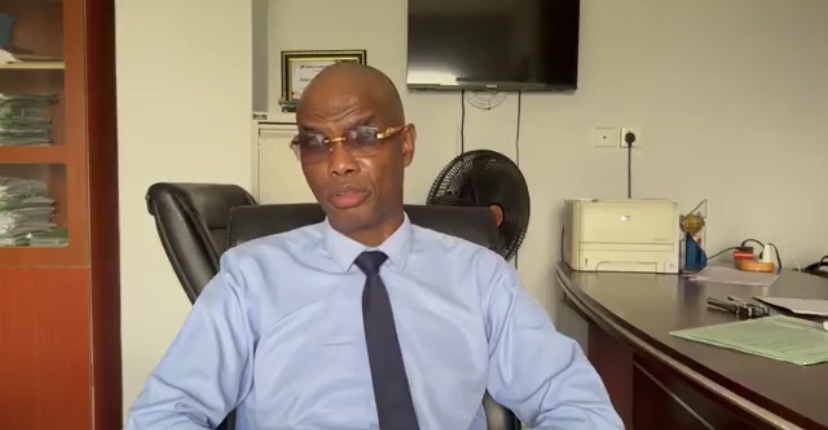
BENIN, Edo – A right that cannot be accessed, enforced and enjoyed is “little more than a right on paper,” Melody Omosah Esq. told visually impaired young people, urging them to treat Nigeria’s disability law as a tool for work and politics, not a document to be celebrated and then ignored.
Omosah delivered the guest lecture at the National Youth Conference of the Nigeria Association of the Blind in Benin City.
The conference theme was “From Exclusion to Inclusion: Empowering Visually Impaired Youth for Political and Social Participation.”
His address, titled From Rights on Paper to Rights in Practice: Enforcing the Disability Act 2018 for the Employment and Political Participation of Visually Impaired Youth, focused on the Discrimination Against Persons with Disabilities (Prohibition) Act, 2018.
The lecture came less than two months after Governor Monday Okpebholo appointed Omosah, a visually impaired lawyer and long-time disability-rights advocate, as Edo’s first Permanent Secretary with a disability.
He previously served as a director in the state Ministry of Justice and as Executive Director of the Network for the Advancement of People with Visible Disabilities (NAPVID). He is also known for developing the Braille Ballot Guide later adopted by INEC.
Omosah said Nigeria had for years treated disability mainly as a matter of welfare.
The 2018 Act, he argued, changed the legal question from “What can we do for persons with disabilities?” to “What are they entitled to as citizens?”
“Disability rights are not favours. They are rights,” he said. “Charity depends largely on the generosity of the giver. Rights create obligations. Charity can be withdrawn. Rights can be demanded and enforced.”
He told delegates that a law, a commission, a policy or a conference resolution still fails if a blind graduate cannot use a recruitment portal, if an employer assumes blindness means incompetence, if workplace software is inaccessible, or if a visually impaired citizen cannot take part independently in politics.
On employment, Omosah pointed to Sections 28 and 29 of the Act, which recognise the right to work on an equal basis with others and reserve a five per cent employment quota in public organisations.
The National Commission for Persons with Disabilities has identified those sections as priority areas of compliance.
He warned against treating the quota as a number rather than a culture, noting that an organisation with 1,000 staff might employ 50 persons with disabilities and still exclude them from training, promotion, management and decision-making.
“Would that be genuine inclusion? I submit that it would not,” he said. “It would be numerical inclusion without substantive inclusion.”
The real tests, he added, are how many persons with disabilities are trained, promoted, placed in professional and management posts, and trusted with leadership.
He also stressed reasonable accommodation: screen-reader-compatible software, accessible documents and websites, Braille where appropriate, and workplace tools that make competence usable. He cited the Persons with Disabilities (Accessibility) Regulations, 2023, as evidence that accessibility is now a legal standard, not a courtesy.

“If a blind employee has the qualification, the competence and the commitment but cannot use the computer system required for the job, the problem is not necessarily the employee. Sometimes the problem is the system.”
Digital systems, he said, can either open doors or close them. The question for government and employers should no longer be whether they have a website, but whether a blind Nigerian can use it independently.
Omosah linked employment to political participation. Economic exclusion, he said, produces political exclusion, as education, skills, work, income, technology and confidence form a platform for public life.
“A blind person should not be seen only as a voter,” he said. “He or she can be a political party member, a party executive, a policy adviser, a campaign strategist, a candidate, an elected representative, a public administrator, a policymaker, a leader.”
The Act, he noted, also covers participation in politics and public life. The aim is not merely to place persons with disabilities in the process, but to enable them to influence it.
He argued that enforcement cannot rest on the National Commission alone. Ministries, employers, schools, parties, electoral bodies, civil society and persons with disabilities themselves all have roles.
The chain he set out was: knowledge, compliance, monitoring, complaint, remedy and accountability.
Speaking as a lawyer who now occupies one of the highest ranks in the Edo Civil Service, Omosah said his career was not proof that blindness is not a challenge, but proof that society should not use blindness to limit possibility.
“I have learnt that sometimes the greatest limitation is not the absence of sight. It is the assumption that the absence of sight must mean the absence of possibility.”
He told young delegates they were “not merely beneficiaries of inclusion” but “potential architects of a more inclusive Nigeria,” while insisting that the legal duty to remove barriers still rests on society.
He proposed ten priorities, including enforcing the five per cent rule as a measurable target; making recruitment and workplaces accessible; providing assistive technology; tracking career progression; strengthening complaints and sanctions; opening political parties and elections to persons with disabilities; and changing public attitudes.
He closed with five commitments: know the law, demand access, build capacity, demand participation, and pursue leadership.
“Inclusion is not complete when you are allowed into the room,” he said. “Inclusion is complete when your voice is heard, your contribution is valued and your competence influences the decision being made.”