Okpebholo Faces Sharp Criticism Over Demolitions Without Court Approval
Inside Edo
Benin, Edo – Governor Monday Okpebholo is under growing scrutiny for authorising and personally supervising the demolition of numerous properties in Edo State based solely on intelligence reports linking them to cultism, kidnapping, and ritual activities, actions carried out without prior court orders, convictions, or judicial hearings for the affected owners and occupiers.
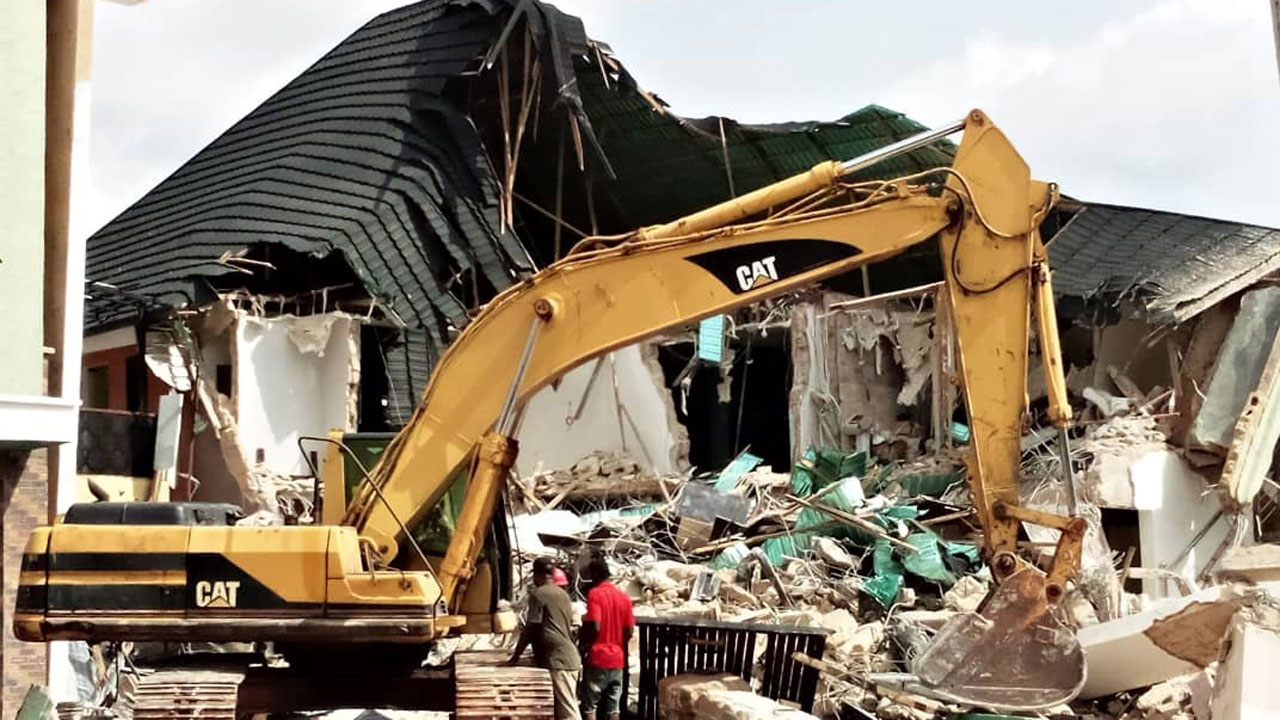
Since April–May 2025, the Edo State Special Security Squad (“Operation Flush Out Kidnappers and Cultists”) has conducted these demolitions under the governor’s direct oversight.
Properties alleged to be hideouts, initiation centres, or ritual sites have been pulled down on intelligence alone, bypassing any formal judicial process.
These operations have raised serious questions about compliance with Nigeria’s 1999 Constitution (as amended).
Section 43 guarantees the right to acquire and own immovable property anywhere in the country, while Section 44(1) prohibits the compulsory taking of property except through a law that provides for prompt payment of compensation and access to courts to determine the owner’s interest or the amount of compensation.
Section 36 further guarantees the right to fair hearing, which requires proper notice, an opportunity to be heard, and judicial determination before any punitive deprivation of property occurs.
Critics argue that the governor’s approach, ordering and supervising demolitions without court involvement directly contravenes these provisions.
No executive authority, they say, has the power to unilaterally destroy private property without judicial oversight, even when fighting crime.
Edo State’s Secret Cult and Similar Activities (Prohibition) Law, 2025 (signed in January 2025) does allow for the confiscation and demolition of properties used in cult activities or related crimes. However, many of its stringent penalties including long prison terms and property forfeiture are explicitly linked to conviction in a court of law.
In practice, the state government has applied these measures administratively. Properties have been demolished purely on intelligence assessments, with Governor Okpebholo often on hand to oversee operations, leaving owners and occupiers without any prior hearing or chance to defend their property rights in court.
This wide gap between the law’s requirements and actual implementation has triggered accusations of a serious constitutional breach.
On June 18, 2026, Governor Okpebholo announced plans to establish a special court to fast-track the trial of kidnappers and cultists, with promises of proceedings wrapping up in two to three weeks and swift enforcement of sentences, including possible public executions.
While this special court could potentially provide judicial backing for future actions, it does nothing to address or legitimise the dozens of demolitions already executed over the past 14 months without any court process. Legal analysts note that the new court cannot retroactively cure earlier violations of due process.
Affected property owners can still approach regular courts for declarations of unconstitutionality and claims for compensation.
Supporters of the governor maintain that the demolitions are necessary under the state’s powers to protect public safety amid rising cult-related violence and kidnapping. They cite the passage of the 2025 anti-cultism law by the Edo State House of Assembly as sufficient backing.
However, constitutional requirements remain clear which is security imperatives do not suspend fundamental rights. Due process can be made faster through a special court, but it cannot be eliminated entirely.
As demolitions continue even after the special court announcement, concerns are mounting that the governor’s current methods expose the state to successful legal challenges.
Courts across Nigeria have consistently required judicial determination and compliance with notice and hearing procedures before property demolitions.
Calls are intensifying for Governor Okpebholo to immediately suspend further intelligence-driven administrative demolitions until the special court becomes operational and all such actions are properly routed through judicial channels.
Until that happens, the ongoing demolitions stand accused of being constitutionally questionable at best and outright illegal at worst.