Senate launches probe into Nigeria's rail woes as Committee targets derailments, vandalism, Chinese loans
Business/Economy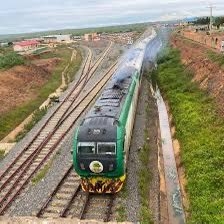
Abuja, FCT – In a bold move to address the escalating crisis plaguing Nigeria's rail network, the Senate has established an ad hoc committee to investigate the frequent derailments that have turned flagship infrastructure projects into symbols of national embarrassment.
The decision, adopted during Tuesday's plenary session, comes hot on the heels of a derailment on the Warri-Itakpe train line, sparking fears over safety, corruption, and mismanaged foreign loans.
The motion, sponsored by Senator Ede Dafinone (APC-Delta Central), painted a grim picture of the Ujevwu-Itakpe corridor – a key Buhari-era project – where services resumed just four days before disaster struck. On Saturday evening at around 7:30 p.m., two of the seven coaches of the Warri-Itakpe Train Service (WITS) derailed at Kilometer 212+8m in Agbor, Delta State.
The Nigerian Railway Corporation (NRC) attributed the incident to suspected vandalism, with no casualties reported, but the episode has suspended operations and heightened public anxiety.
"This isn't just a technical glitch; it's a systemic failure that's costing lives, time, and billions in taxpayer money," Dafinone declared during the debate, urging immediate repairs, enhanced security, and more rolling stock to boost daily services to at least two round trips.
His call resonated across the chamber, where Senate President Godswill Akpabio lamented inheriting a "failed system" from the previous administration, while emphasizing the probe's role in uncovering root causes without political finger-pointing.
Chaired by the fiery former APC national chairman and Edo North Senator Adams Oshiomhole, the nine-member committee draws from diverse political affiliations, signaling a bipartisan push for accountability.
Key members include:
Enyinnaya Abaribe
Aliyu Wamakko
Solomon Adeola
Danjuma Goje
Ireti Kingibe
Ede Dafinone
Adamu Aliero
Additional:
Huseini Babaginda, Wasiu Eshinlokun, Osita Ngwu, Ibrahim Dankwabo, Sahabi Yau – per expanded reports
The panel has a six-week mandate to deliver a comprehensive report, including recommendations for public hearings to grill stakeholders.
Their remit is expansive: dissecting the technical and human factors behind recurring derailments, auditing the quality of imported rail materials (often sourced amid quality scandals), and scrutinizing multi-billion-dollar loans from China funneled into projects like the Itakpe-Warri line.
Oshiomhole, known for his no-nonsense labor roots, vowed to "expose any rot" in the execution of these Buhari-era initiatives, which have been dogged by vandalism, mechanical breakdowns, and allegations of graft.
In parallel resolutions, the Senate directed the Ministry of Transportation and NRC to fast-track repairs on the affected line, bolster anti-vandalism measures, and restore full operations – a tall order given the spate of incidents that have plagued routes nationwide.
The NRC has already arrested two suspects in connection with the Agbor derailment, but experts warn that without deeper reforms, these patchwork fixes won't suffice.
This probe arrives at a pivotal moment for Nigeria's transport sector. The Warri-Itakpe line, part of a $1.5 billion Chinese-financed push to modernize rail infrastructure, was hailed as a game-changer when commissioned in 2020.
Yet, persistent issues from substandard tracks to rampant sabotage by scrap metal thieves have reduced it to intermittent service, eroding investor confidence and commuter trust.
Critics, including transport unions and civil society groups, have long alleged that kickbacks and poor oversight inflated costs while compromising quality, as the committee's public hearing could unearth explosive details, potentially reshaping how future loans – like those for the Lagos-Calabar line – are managed.