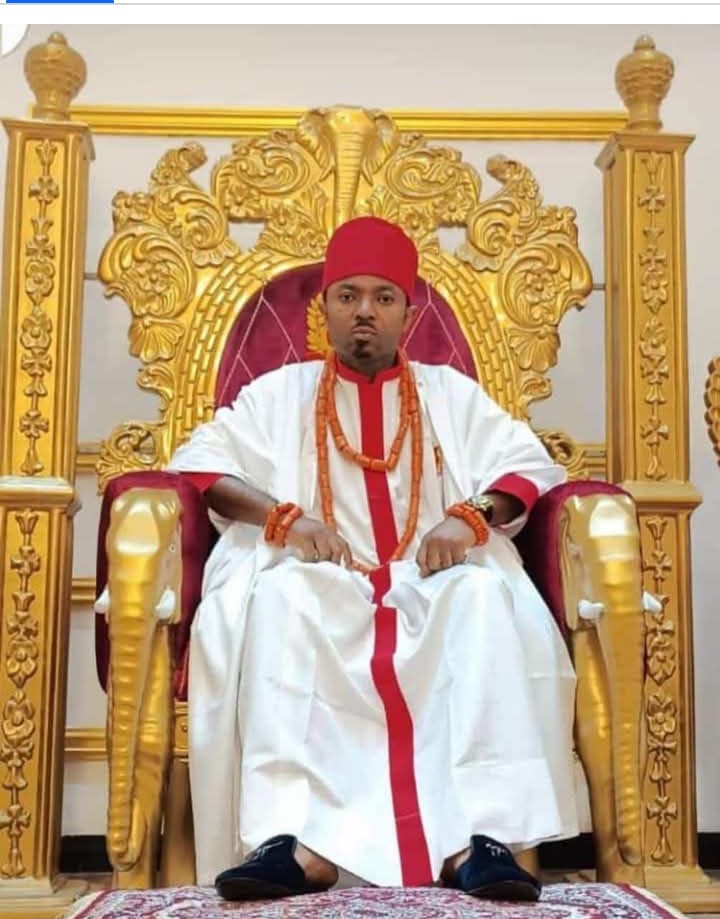
Osokpikan Rejects Claims of Esan Origin, Affirms Benin roots
Inside Edo
Benin, Edo — The Osokpikan Society of Nigeria Incorporated issued a formal public announcement on July 11, 2026, addressing what it described as “misleading and inaccurate” publications and online comments regarding the society’s origins, history, and traditional authority.
The two-page statement, signed by National Publicity Secretary Owere Chief Omo-Osagie Uteteneghiabi (Obadolagboyi of Benin Kingdom), categorically rejects assertions that the society originated in Esanland.
The National Executive Council stated that it convened a consultative meeting in Benin City with senior officers and traditional leaders.
It emphasized:
• The claim of Esanland origin “is entirely false and is hereby categorically rejected.”
• The society recognizes and respects “the rich history of the Esan people, whose historical ancestry and longstanding relationship with the ancient Benin Kingdom have resulted in many shared cultural values, customs, and traditions.”
• However, these connections “must not be misrepresented as evidence that Osokpikan Society of Nigeria Incorporated originated in Esanland.”
• For clarity: “Osokpikan Society of Nigeria Incorporated traces its origin, foundation, and traditional authority to the Great Benin Kingdom.”
• The society operates under the traditional authority of His Royal Majesty, Omo N’Oba N’Edo, Uku Akpolokpolo, Oba Ewuare II, Oba of Benin.
• It has expanded branches across Esanland, other parts of Edo State, South-South, South-West, Northern Nigeria, several African countries, Europe, and America.
• Certain ritual and esoteric traditions remain confidential and preserved within the society.
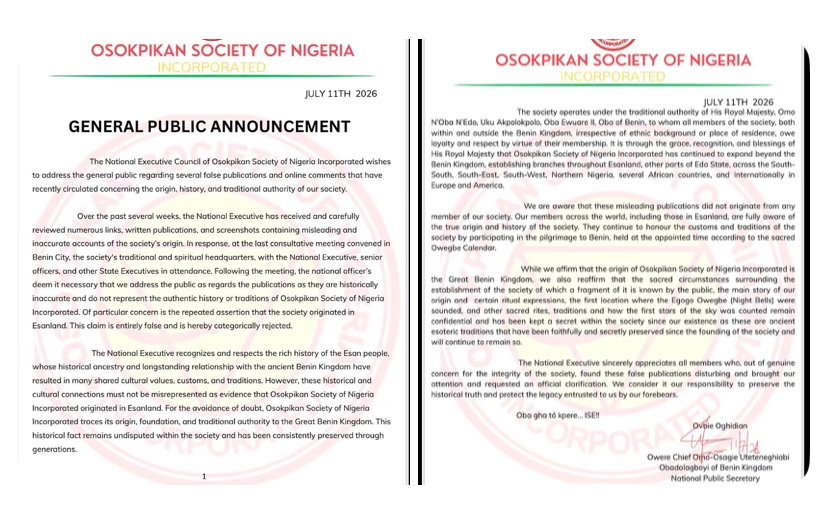
The announcement noted that the misleading publications did not originate from society members and that members, including those in Esanland, continue to honor Benin customs and participate in pilgrimages to Benin.
Osokpikan is a traditional Edo cultural and spiritual society focused on traditional medicine, personal and community protection, mutual support, and preservation of cultural heritage.
It maintains a structured national executive and operates with visible symbols and colors often associated with red, yellow, green, and white.
The group has long been linked to Benin Kingdom traditions and has faced occasional external characterizations as a “secret cult” in older reports, though it presents itself publicly as a cultural organization.
The society has maintained a presence and branches in Esan-speaking areas of Edo State while insisting on its foundational ties to the Benin monarchy.
This episode highlights ongoing dynamics in Edo State around cultural authority, historical interpretation, and ethnic identity.
While the Osokpikan Society stresses shared heritage and mutual respect with Esan communities, it firmly maintains institutional and traditional links to the Benin Kingdom under the Oba’s oversight.